In the Forestry Sector, when working with agrochemical applications, the correct use of Personal Protective Equipment (PPE) is both a legal obligation and a vital health protection measure. South Africa’s legal framework makes this clear: the Occupational Health and Safety Act 85 of 1993 (OHS Act) requires employers to ensure the health and safety of persons at work, including protection against hazards arising from the use of substances and equipment. Under the OHS Act, employers must provide appropriate protective clothing, equipment and systems of work wherever hazards cannot be fully eliminated. In addition, the Fertilizers, Farm Feeds, Agricultural Remedies and Stock Remedies Act 36 of 1947 which regulates the registration, sale and use of agricultural chemical remedies, ensures that agro-chemical products are registered, labelled and sold with safety instructions including the legally binding label explaining the required PPE.
Furthermore, forestry-specific certification schemes reinforce the link between PPE compliance and responsible forest management. The Sustainable African Forestry Assurance Scheme (SAFAS), which administers the South African regional system endorsed by the Programme for the Endorsement of Forest Certification (PEFC), stipulates that certificate holders must comply with national legislation and standards. Meanwhile certification under the Forest Stewardship Council® (FSC®) incorporates adherence to national legal requirements as part of the standard for sustainable forest management. In practice this means that forestry companies certified under SAFAS/PEFC or FSC must ensure their workers use correct PPE as required by legislation and agrochemical-label instructions.
Why PPE matters
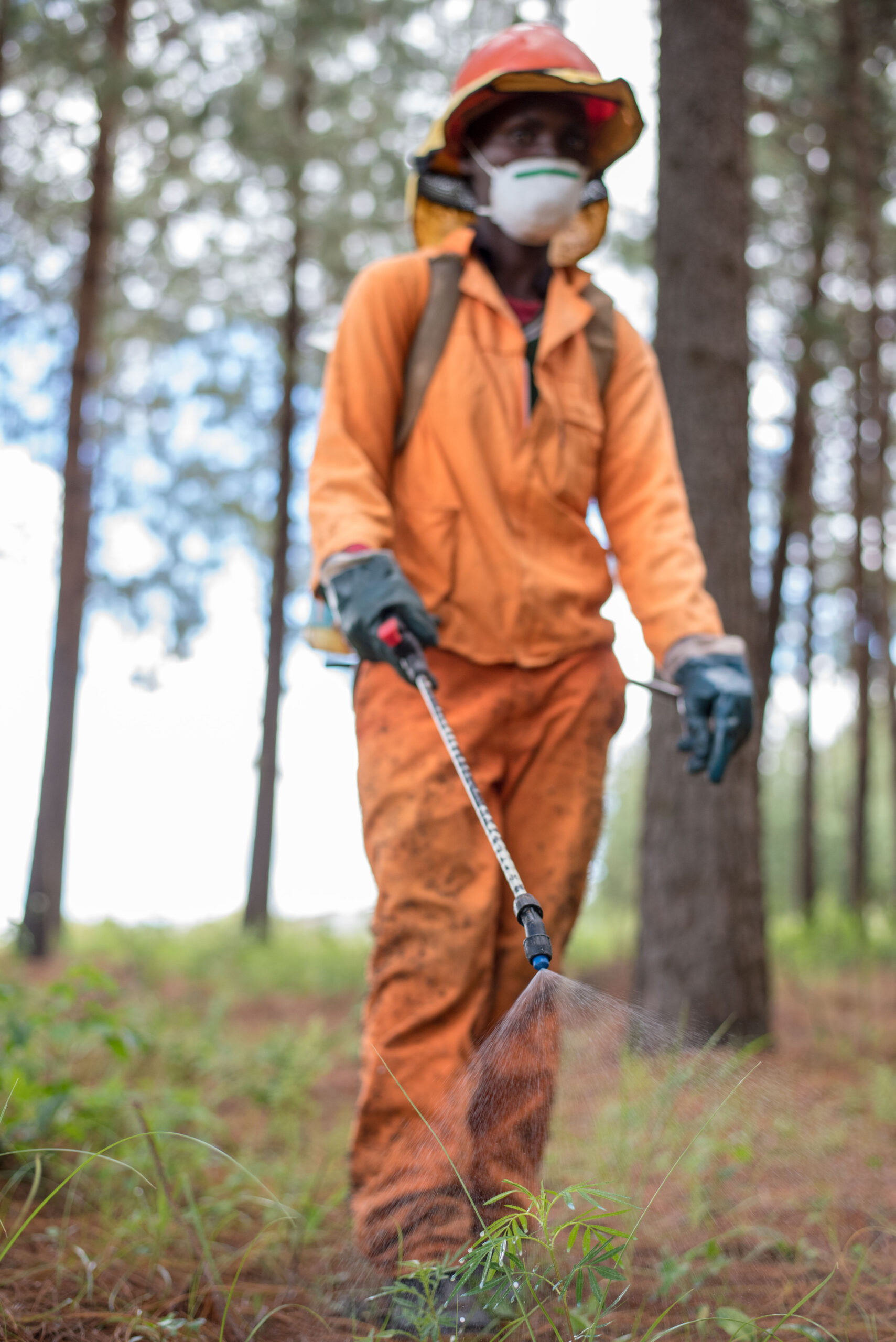
Forestry operations often involve exposure to agrochemicals, under rugged outdoor conditions. If PPE is absent or inadequate, workers risk serious health effects such as skin burns, dermal absorption of toxic agents, inhalation of chemical aerosols or vapours and long-term chronic conditions among others. The label of a pesticide is not a ‘nice to do’ checklist: it is legally binding and sets out the PPE required for safe handling and application. PPE must therefore be selected to suit the specific chemical, formulation, exposure route, application method and environmental conditions.
Additional health considerations in hot contries like South Africa
Wearing full PPE in hot, humid and open forestry environments poses additional risks of heat stress, dehydration and fatigue. Employers and site managers must therefore plan for rest breaks, shaded cool-down zones and ensure workers have ready access to drinking water. Forestry workers should be monitored for signs of heat exhaustion and PPE use must be balanced with safe working hours and hydration. Training and supervision in these conditions become critical. The forestry certification standards (SAFAS/PEFC, FSC) emphasise worker welfare as part of sustainable forest management, so comfortable, well-fitting PPE and heat-mitigation measures are not optional.
Common PPE requirements and checks: Fit-for-purpose and reporting failures
Typical PPE for agrochemical application in forestry includes:
- Chemical-resistant gloves (e.g. nitrile, neoprene)
- Protective coveralls or long-sleeved clothing
- Plastic or rubber boots
- Eye protection (goggles or face-shield)
- Respiratory protection (dust mask or chemical cartridge respirator) and waterproof outerwear when required.
Employers must ensure that the equipment is suitable for the hazard, maintained and replaced as necessary. Under the OHS Act, the employer must provide PPE free of charge, ensure its suitability for the task and train staff in its use.
Before every wear, the PPE should be inspected for damage, holes, tears, chemical permeation and correct fit. Any failure (for example a torn glove or malfunctioning respirator) must be reported through the organisation’s health-and-safety reporting structure. The OHS Act provides for employer duty to institute health and safety committees, representatives and internal reporting systems. Failure to report or act on defective PPE can lead to exposure incidents and may breach the legislation.
Post-application PPE care: Washing, storage and separation
Once an agrochemical application has taken place, PPE must be handled correctly to prevent secondary exposure or contamination. Contaminated PPE should be cleaned immediately after use, in a dedicated laundry area and not washed at home where it may contaminate other clothing. PPE used for agrochemical spray should be stored separately from general clothing, in a clean and dry location away from chemicals. Used PPE with major contamination or damage must be disposed of safely in accordance with the label instructions and chemical container regulations under Act 36. In a forestry context, Standard Operating Procedure (SOP) for storing PPE is in a locked and dry facility, cleaning before reuse and ensuring no cross-contamination with other gear is essential for both worker safety and compliance.
Conclusion
In the South African Forestry Sector, correctly chosen and maintained PPE is far more than a regulatory box-ticking exercise: it is a frontline defence for worker health, a legal requirement under the OHS Act and Act 36, and a key factor in meeting the standards of certification schemes such as SAFAS/PEFC and FSC.
Mandatory PPE requirements include reading and following the agrochemical label, ensuring PPE is fit-for-purpose, caring for it correctly after use and addressing the realities of working in heat and challenging terrain. Forest managers can protect their workforce, safeguard their operations and demonstrate true commitment to sustainable forestry.